
















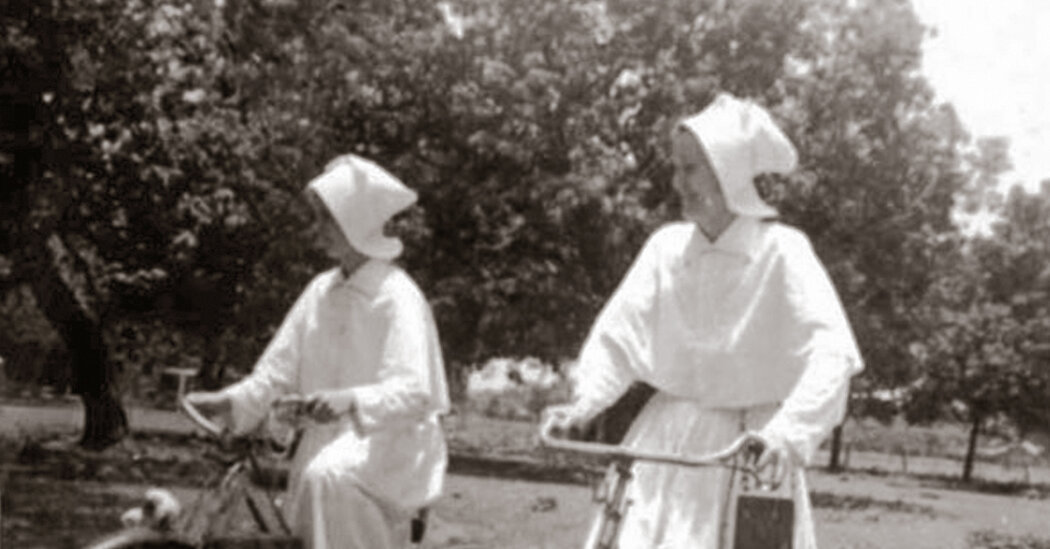
Once she was strong enough, Minj would walk next to her mother carrying bricks in a basket on her head at construction sites. Together, they earned enough for tuition, books and pencils. In 1945, as the war ended, Minj was 12 and had finished seventh grade, but her ambition to be educated had begun to cause trouble. Here she was, a young girl, neither pliable enough to be married off nor clever enough to make her way out of her village, so eventually she ran away from home and found her way to Mokama.
When she arrived, Minj remembered those precious days at school, watching the nurses who cared for the boarding students. She could see that same competence and determination in these American women. She decided to stay. Almost immediately, Minj became essential to the sisters’ work. When someone turned up at the dispensary with symptoms the sisters couldn’t comprehend, she translated. When they received the first calls to go out into the village to deliver a baby, she went with them.
Already, by late January, patients were lining up for treatment. But the sisters still had no doctor of their own. Veeneman wrote letters to missions, hospitals and medical schools all over India to find one. The opening date was set for July 19. “Please,” she wrote in one letter home to her family, “redouble your prayers that we will get a doctor by that time.”
On July 24, 1948, days after the opening of the hospital, a young doctor walked into the mission. Lean, strong and quiet, with thick hair that he kept combed in a stylish wave, Eric Lazaro was not their first choice. The same day he accepted their offer, Veeneman got a letter from a woman answering the same newspaper ad. “I am only sorry that we did not get the lady doctor first, because that is what is needed most in our section of the country,” Veeneman wrote in a letter to the motherhouse. But he was as good a substitute as they were likely to find.
Lazaro was born in 1921 to an Anglo-Indian family. When he was 6, his mother died, possibly of tuberculosis. Her death destroyed their young family. His widowed father, an obstetrician, drank heavily and, unable to care for his son, sent him to live on the forbearance of his relatives. As soon as he finished high school, Lazaro started medical school, scraping together just enough money to pay his fees. Once he finished, Lazaro was among those millions set adrift after the end of the war but before independence. Mokama was a nowhere town, but he was a doctor with no experience, and he was ready to leave everything else behind.
As soon as the hospital opened officially, patients began coming every day, a stream of people with cholera and malaria and unspecified fevers, men with infected wounds and women in labor. The mission annals and the sisters’ letters home, which were at first so full of homesickness — Veeneman would sometimes weep while reading letters from the order’s headquarters back in Kentucky — were instead occupied with accounts of the people who came to the hospital, whether they lived or died, and the occasional novelty of a wealthy patient who arrived by motorcar or summoned a doctor and nurse for a house call made by elephant.
The supply of medicines and equipment the sisters brought with them as cargo — antibiotics, penicillin, painkillers, bandages, disinfectants — were usually enough to treat the most common illnesses and injuries. But occasionally they could do little but act as witnesses, for the woman in the throes of a psychotic episode or the baby in the final stages of dehydration.