














But the move toward lay leadership has gained steam since 2001, when Georgetown University in Washington, D.C., became the first Jesuit college or university to name a president who was not a member of the order.
That trend reflects a grim reality facing the Catholic Church in the United States: There are not enough young men entering the priesthood to replace older priests who retire or die, leaving an ever smaller pool of clergy members who are qualified to run a large nonprofit entity like a modern university.
The number of Catholic priests in the United States has dropped precipitously in recent decades. In 1970, there were 59,192 priests in the country, but that number dropped to 35,513 in 2020, according to the Center for Applied Research in the Apostolate, a Georgetown University initiative that conducts social science research on matters related to the Catholic Church.
That decline has been even sharper among religious orders, a category that includes the Jesuits and groups like the Franciscans and Dominicans. In 1970, there were 21,920 priests in religious orders in the United States, but by 2020 that number had fallen to 10,308.
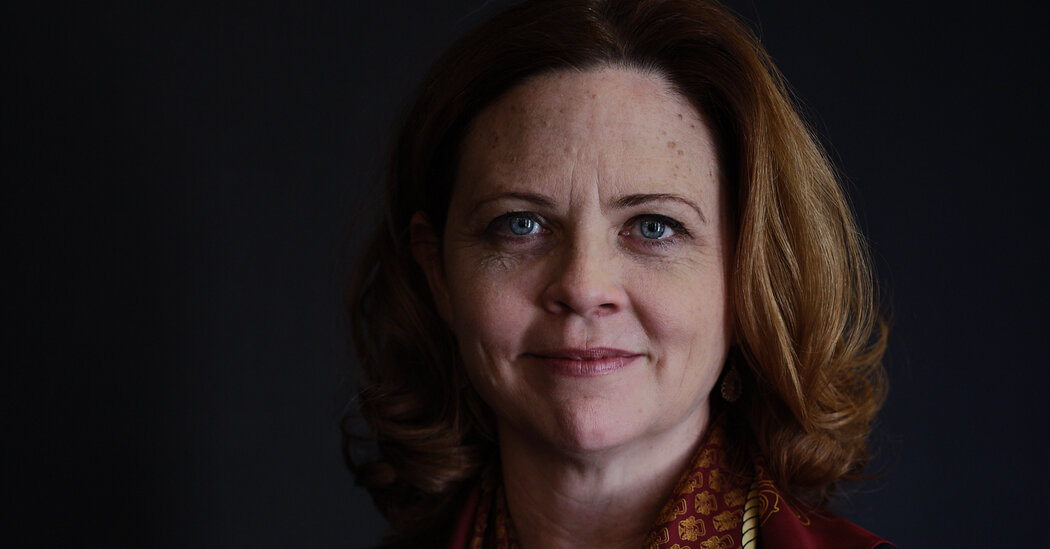
Father McShane addressed that decline when introducing Ms. Tetlow on Thursday.
“The demographic realities that are ours are harsh,” he said. “They demand we rise to the challenge and embrace a new way of doing things.”
When Father McShane entered the Jesuit order in 1967, there were 1,460 Jesuits in New York, he said, adding that today there are 2,086 Jesuits left nationwide, and the average age is over 70.
Only 34 men entered Jesuit training in the country last year, Father McShane said. And at Fordham, only 14 Jesuits still teach students, out of 747 full-time instructors, according to a university spokesman.