

















As part of a weekly series on changes in the workplace for women, we’re profiling those who stepped up at a moment of crisis and filled gaps in the labor market during the pandemic.
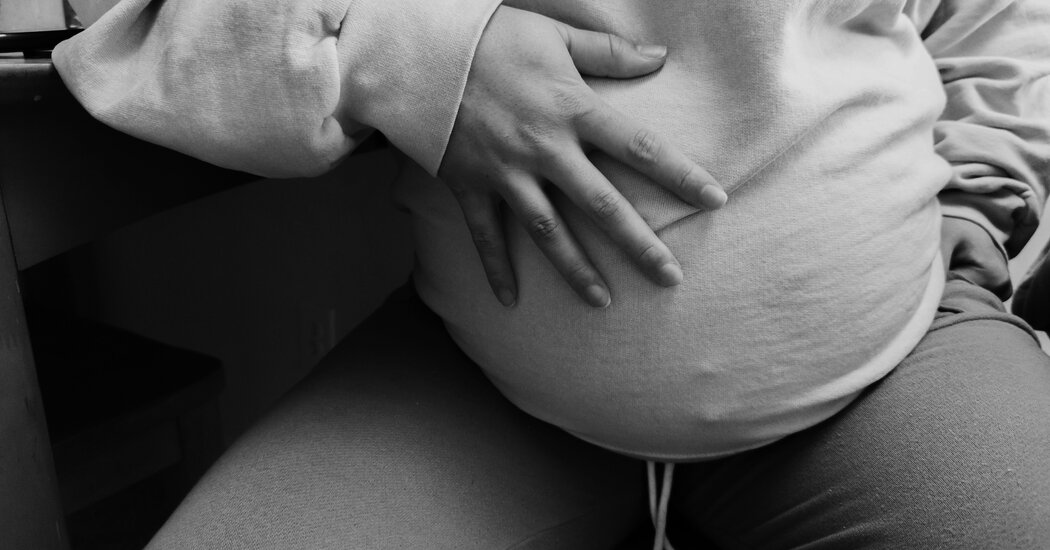
On a quiet, frigid Sunday afternoon, Sarah Bowers, a 25-year-old social worker well into the third trimester of her first pregnancy, told the three women gathered in her tidy home in south New Jersey that she was dreading having to give birth at the hospital.
The hospital where she was scheduled was triggering for her, she said. She had spent six years in and out of that same institution as the primary caretaker for her mother, who was diagnosed with colon cancer in 2012 and died in 2018.
“OK, so the hospital is already not giving you good energy,” said Niulquie McKinney, a doula and midwife who is fondly known in her community as Nili and whose serene and measured demeanor makes her seem far older than her age of 34. She and her team — Evana Cooper, a doula, and Asma Shakour, a doula-in-training — were helping Ms. Bowers draw up a birth plan that would help keep her calm. They demonstrated breathing exercises and discussed whether to bring candles to the delivery room.
For Ms. McKinney, empowering pregnant people is the motivation behind her work. She became a doula in 2019 and, in early 2020, just before the pandemic, she enrolled in a program to become a certified midwife, which would allow her to perform vaginal exams, monitor vital signs and deliver babies, particularly in home birth situations. She also founded the Foremothers Birth Services agency, which is intended to help low-income, marginalized women not just survive childbirth but also go into the birthing experience with their eyes wide open.
When the pandemic upended the health care industry in March 2020, leaving pregnant women frightened and vulnerable, it only highlighted for Ms. McKinney how essential her work was and how much of a difference she could make.
In the first months of the pandemic, doulas — who often provide crucial assistance in the birthing process — were sidelined. In some states, they were barred from entering delivery rooms with pregnant women as part of Covid restrictions. As individual hospitals began adopting different policies for doula support, it created a labyrinthine system of paperwork for doulas to navigate. Some hospitals demanded specific doula certifications, while others wouldn’t let doulas leave the premises once they’d been admitted, even if a woman’s labor extended over several days. Many women decided to opt for home births or birthing centers, creating a surge in demand for both doulas and midwives.
Ms. McKinney, while still studying to be a midwife, jumped in to volunteer at birth centers that were overwhelmed and understaffed, picking up hands-on training along the way.
The pandemic “was a scary and unpredictable time,” she said. “But I felt as if I had a duty to be out there.”
Ms. McKinney entered the field in 2018 after going through two births herself — experiences that left her wary of the broader health care industry. With her first child, in 2016, her doctor suggested she have a cesarean section — a recommendation, she said, that took her aback, given what she understood about the conditions of her pregnancy.
“No pre-eclampsia, no gestational diabetes, I felt great,” she said, adding that the doctor didn’t communicate his thought process with her. “To this day, I continue to ask myself: Why would he even ask me that?”
In 2018, she was pregnant with twins, which can be considered a high-risk pregnancy. When she went into labor early, her medical team responded with several interventions that she didn’t welcome. Again, she felt disregarded.
“I was quickly admitted and immediately strapped down,” she recalled. “I felt defeated.”
Shortly after giving birth, while recovering at home in New Jersey, she saw a TV ad encouraging people to take free classes to become community doulas. Birth doulas often provide women with helpful information and wellness tips during their pregnancies, as well as prepare them emotionally and physically for what to expect during and after childbirth. Though doulas are not certified as medical personnel, they have, in recent years, become an increasingly popular antidote to America’s often fraught maternal health care system, acting as shock-absorbing touchstones of calm during some of the most vulnerable days of a woman’s life.
The ad prompted Ms. McKinney to sign up for doula training. “What drew me to it, honestly, was the knowledge that I thought I’d receive,” she said. “I thought that I was going to learn and maybe avoid any further trauma for myself.”
She’s since found that, in her practice as both a doula and a midwife, she’s discovered her purpose. “I think she’s had it in her soul for a while to be a midwife,” said Trinisha Williams, the former director of the Brooklyn Birthing Center, who became a mentor to Ms. McKinney when she started volunteering. From the first time they met, at the start of the pandemic, Ms. Williams said, Ms. McKinney seemed as if she knew exactly what she was doing and had been working in maternal health care for a long time.
Almost 90 percent of Ms. McKinney’s more than 100 clients are members of low-income communities, and they often use Medicaid to pay for her services. With Ms. Bowers, the team considered offering free home birthing services, which are not covered by Medicaid in New Jersey. In the end, she delivered in the hospital with the doula, Ms. Cooper, by her side.
-Ms. McKinney and her team check in regularly with their clients for up to a year after birth, in part because of the heightened dangers of physical and mental postpartum complications within at-risk communities. Ms. McKinney and her staff regularly text or call new mothers, even taking them out to lunch or coffee. Many times, they bring fresh cooked meals to their clients’ homes or have something nourishing delivered to them. They often become their confidants and friends.
“We feel a connection with the babies and families. We’ve been invited to weddings and birthday parties,” Ms. McKinney said. “When we do our check-ins, it’s more like, ‘Oh, your auntie so-and-so came to visit!’”
In January, the Foremothers team visited Andrea Ross, a client in Philadelphia who had given birth to her son, Zackai, six months prior. Ms. Ross delivered her son through an emergency C-section, which had not been her hoped-for experience. While watching Ms. McKinney’s team play with Zackai, Ms. Ross was able to finally open up about his birth and talk through that emotionally charged moment.
As grueling, time consuming and emotional as the work can be, Ms. McKinney says each birth she has facilitated feels like “a step toward my own healing.”
“Little did I know that the work itself would be therapeutic,” she said. “That moment when the baby is born really makes up for a lot of pain.”
This series is part of a technology partnership with Google Pixel exploring the journalistic applications of smartphone photography.
The Times maintains full editorial independence. Technology partners have no control over the reporting or editing process and do not review stories before publication.