


















LETTERS TO GWEN JOHN
By Celia Paul
“I hate the word ‘muse,’” Celia Paul writes in her excellent new book, “Letters to Gwen John.” She also hates being called “an artist in her own right.” It wasn’t until after Lucian Freud died in 2011 that she escaped either term. She was 52, an acclaimed artist, and long married to Steven Kupfer. The affair that branded her was well in the past, but it was only with Freud’s death that she could gain some control of the story.
For Paul, looking back in order to look forward, the artist who leaps across time is Gwen John — who was herself Auguste Rodin’s muse. When she became his model and lover, in 1904, Rodin was 36 years her senior, monumental, lauded and powerful. She called him her maître. Similarly, Paul was 37 years younger than Freud when she fell under his spell in 1978 (she was 18), and he too was monumental, lauded and powerful. “Concentration” was Freud’s word: concentration in the name of art, justifying all his behavior. Rodin for his part professed to renounce daily trivialities in the name of art.
Secret Letters Throughout History
For centuries, people have exchanged information in writing. Science is now casting new light on what was once meant to be private.
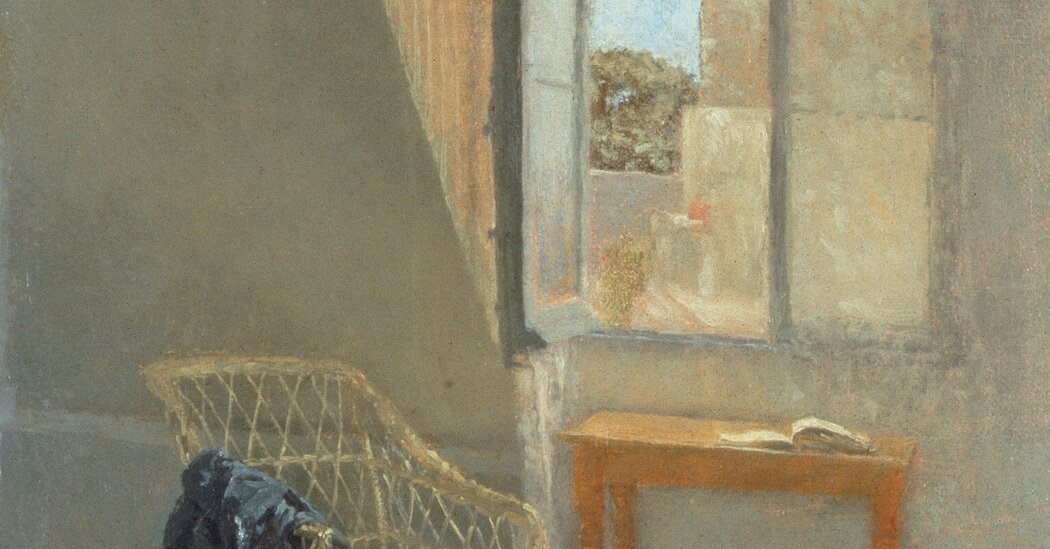
Paul first wrote of these parallels in her 2019 memoir, “Self-Portrait.” Not only the chronic unfaithfulness of these men, but the longing and the waiting suffered by the women, and the profound effect on their own art. John went inward, and painted out from there. Paul never emulated the harsh scrutiny Freud turned on his models. She wanted to paint her subjects like handwritten letters, with the artist’s character etched into them. She wanted to “paint truthfully,” as John had done.
John wrote many letters, a form of intimacy that guided and steadied her. Paul quotes from them as she tracks the affinities of their art, the complexity of their journeys, the isolation forced on them. A woman can do a lot in the shadow realm, she says, but there comes a time when cellar living is only good for “potatoes.” Was that why the sea was so important to them both? Its wide horizon, the boundless wash of time? John didn’t paint human aging — as, increasingly, Paul does — but she painted the passing of time, the fleeting glimpse as life happens.