
















To the Editor:
Re “The Future Isn’t Female Anymore,” by Michelle Goldberg (column, June 19):
While reading this article I couldn’t help but think about the world my 21-year-old daughter experiences and the one I experienced as a now 60-year-old doctor, mother, daughter and wife.
Some of feminism’s decline mirrors public health successes like vaccines: Many of the problems have been eliminated, so the success is not appreciated. I grew up in a world in which girls’ options were far more limited. The younger women don’t know the battles, so how can they see the benefits?
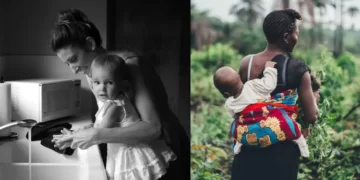
Feminism in a way quit too early. We are left with, as a famous perfume commercial of yesteryear sang, taking home the bacon and frying it up in a pan — exhausted, overworked, and still doing the majority of home and child care, as many studies have revealed. Feminism gave us freedom, but also a life that in many ways is so much harder than that of our mothers.
Katherine Frederick Galarza
Kinnelon, N.J.
To the Editor:
As usual Michelle Goldberg assesses political and cultural situations thoughtfully and incisively. I agree with her analysis that something is different about younger as well as (like me) older women and how we are or are not engaging with feminism.
However, I believe she has failed to acknowledge two things: One is the larger context of profound exhaustion. We have all been assaulted by right-wing forces for the past five years and must be careful about how we expend our energy. Second is that much of this energy, especially by women, is being directed at saving democracy.
A few years ago I might have thought this was overreaching. Saving democracy? Oh get over yourself. Today women are heading up grass-roots groups active in recruiting Democratic candidates for local offices from school boards (now clearly so important) on up. We are working on state-level races. We are the leaders of groups registering new voters. We are out there protecting the vote.
Once we have stabilized democracy and defeated the terrifying authoritarian forces, we will return to the fight for women and feminism. Until then come join us.
Isabel Byron
Brooklyn
To the Editor:
I am male and Republican. Not that it should matter, but we all have identity labels today. I have followed the feminism movement for a long time now. I totally support the treatment of women and all people equally. I have, however, found that feminism tends to put all women in the same basket — they should all think alike and support the same issues.
Women, like men, have many different ways of thinking, different values and backgrounds. The feminist movement wasn’t and isn’t inclusive of others who are more moderate or conservative. When feminism focused on the workplace and equal treatment is when it flourished and could be supported by all women. That has changed to promote liberal, sometime radical (woke), positions and has become irrelevant to many women.
Bruce Buechner
Mobile, Ala.
To the Editor:
As a former editor of Ms. magazine and a former reproductive rights organizer, I could point to the changes within my own lifetime as a result of feminism that younger women might have forgotten or not even know about: credit in our own name, recognition of marital rape as a crime, job listings that don’t differentiate by gender, and so much more. At the same time, feminism has grown to include intersectionality and reproductive justice, both terms that acknowledge that the struggle to achieve gender equality must embrace racial, economic and other disparities.
I have seen it all and I agree with Michelle Goldberg that the movement has always experienced “cycles of matricide; what is liberating to one generation is often mortifying to the next.” What we need to remember is that backlash is endemic to change and that self-searching is essential to movements.
The alleged infighting among feminists is because we haven’t reached our goal. Women remain second-class citizens, and that makes us frustrated and angry. The point is, we have not stopped fighting.
Ellen Sweet
New York
To the Editor:
Forty years ago my mother advised me to join both the American Association of University Women and the League of Women Voters wherever I happened to move. I heeded her advice and joined many different branches of these then vibrant organizations committed to women’s education, political campaigns and a host of other women’s issues.
The average age of members, however, was at least a generation older than I was at the time. Most young women were involved in P.T.A. groups or primarily concerned with the difficulties balancing career and child rearing.
In fact, they had the relative leisure of involving themselves in those issues because the Colorado River was not close to drying up and mass shootings in schools were not the norm. My sense is that young women now are not only balancing work and child care but also most interested in non-gender issues like climate change and gun control.
I believe that the feminist movement must evolve to grow, and the best way to do that is to interview scores of young women and find out what their concerns are! Take nothing for granted; get the facts and become responsive to a new generation of young women.
Sarah Mognoni
Waterford, N.J.
To the Editor:
Re “Feminism Made a Faustian Bargain With Celebrity Culture. Now It’s Paying the Price,” by Susan Faludi (Opinion guest essay, nytimes.com, June 20):
It occurs to me that when I was a young girl in the 1970s, I knew what feminism looked like. It looked like my mom reading Ms. magazine, and after work attending feminist book readings and meetings, when her top goal was “equal pay for equal work.”
Now, at 56, I have no idea what feminism is. As Ms. Faludi implies, celebrity feminism has warped all perception of the movement. What are feminist goals? Who are the feminists and what do they want to fight for? Where are they? Certainly they’re not floating in the ether of internet culture.
I understand that feminism is found on the ground, not after a hashtag, but what can we women do now to get involved? What are we specifically trying to achieve, after losing so much time? Is it too late?
Rebecca Skolnik
Corona Del Mar, Calif.
To the Editor:
The thought-provoking essays by Michelle Goldberg and Susan Faludi decry the rise in anti-feminist sentiment exemplified by the Supreme Court’s opinion overturning Roe v. Wade and the backlash against the #MeToo movement.
As a longtime historian of feminism I have tracked the rise and fall of women’s struggle for equality through many generations. What has become clear to me is that periods of high feminist protest have inevitably been followed by anti-feminist backlash and the reversal of some (but not all) hard-won freedoms.
Heartbreaking though these losses are, it is important to take a long view of history. Our journey is not defined by what we have lost, but by how far we have traveled and what has changed for the better along the way.
Miriam Schneir
Montclair, N.J.
The writer is the editor of “Feminism: The Essential Historical Writings” and the author of “Before Feminism: The History of an Idea Without a Name.”
To the Editor:
Re “Looking Back at Ms., Age 50” (Opinion Round Table, Sunday Review, June 19):
Thank you for the delicious interview with the brave founders of Ms. magazine. The conversation was a reminder of how far women have come and how far we have to go.
I write as the last person to hold the title of editor in chief of Ms. magazine, from 2003 to 2005. My mission was to save the struggling magazine from closing, to improve circulation and to re-establish its editorial prestige.
We did. With a tiny staff, Ms. was nominated for a National Magazine Award in 2005. We published writers such as Amy Bloom, Sharon Olds and Alice Walker and put women like Queen Noor and Wanda Sykes on the cover. We did one of the last interviews of her life with Julia Child. I braved several television interviews on Fox News with Bill O’Reilly.
Circulation boomed. Letters flooded in from so-called flyover country. One letter said: “I drove 30 miles to the bookstore to buy your magazine. Wow! It’s real!”
In other words, we reached out to women who were not on the far left. We invited conversation about controversial topics. We considered opposing views, even on abortion, and some of us even considered revising our own positions.
I salute the founders of Ms. magazine and my friend and heroine Gloria Steinem. We still have much work to do.
Elaine Lafferty
New York
To the Editor:
Thank you very much for your piece on the 50th anniversary of Ms. magazine. Your article clearly articulates what a lifeline this publication was for many women like me. I clearly recall the thrill of reading the magazine cover to cover. And what an explosion the magazine created in mainstream culture!
I especially appreciated hearing the thoughts of the pathfinders who put the magazine together. By making history come alive, you did your readers a great service with this thoughtful retrospective.
Patricia Scanlon
Media, Pa.