
















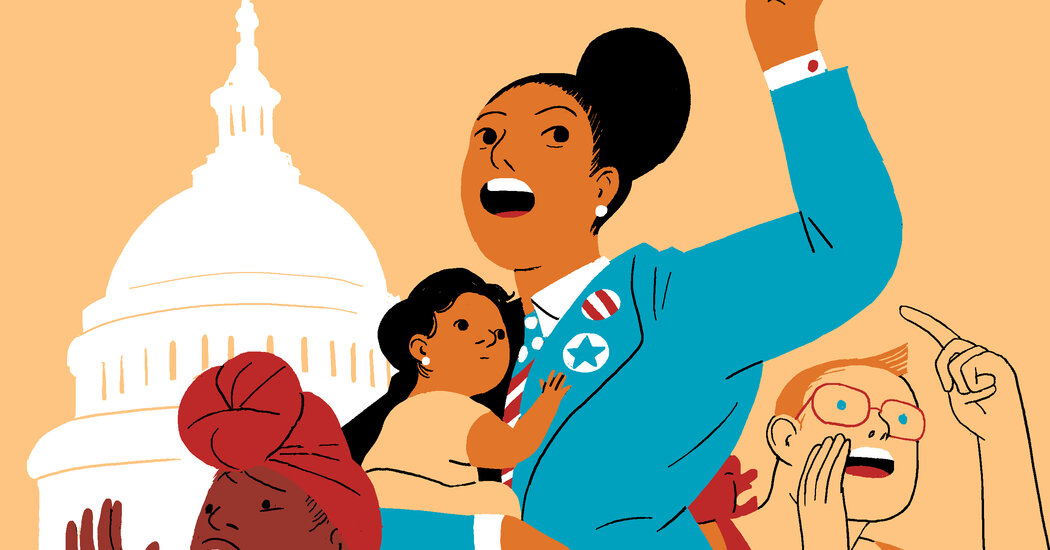
Politicians bringing their newborns to work and taking parental leave while in office is something new. It used to be that mothers mostly ran for office when their kids were older, said Corrine McConnaughy, a political scientist at Princeton University. “Nancy Pelosi is famously a mother of five, but also — as was not atypical of women navigating politics in her generation — waited until her kids were grown and then entered politics,” McConnaughy said.
It matters that women are starting earlier, because unlike male politicians — Pete Buttigieg, who ran for president after a mere two terms as mayor of a small city, comes to mind — they “feel they need to be more qualified to succeed,” said Jennifer Lawless, a professor of politics at the University of Virginia. “They’re not going to throw their hat into the ring when they’ve been in the Senate for two years.”
In previous generations, there was criticism of women who aimed for high office while their kids were still at home. In her excellent book, “The Political Consequences of Motherhood,” Jill Greenlee, an associate professor of politics at Brandeis University, describes the way Geraldine Ferraro, the three-term New York congresswoman, faced a “chorus of criticism” while running for vice president in 1984, along the lines of: “I’m not voting for her because she belongs in the home, she belongs back with her kids, what the hell is she doing this for?”
“Ferraro and her family were the subject of public scrutiny, as was (and is) often the case when women step into new political roles,” Greenlee writes. “This forced Ferraro and her defenders to demonstrate her devotion as a mother while also promoting her professional credentials.”
By the time Sarah Palin, who was then Alaska’s Republican governor, ran for vice president in 2008, there was less cultural resistance to the idea of a mother in that role, though there was still intense, at times unfair, scrutiny of Palin’s family. Palin, who embraced a “hockey mom” image, herself declared “that she was part of a generation of women who have become used to juggling work and family and would not shy away from a political challenge,” Greenlee notes.
In the intervening 14 years, we keep moving forward, but a full acceptance of mothers as political powerhouses will take more time. Last year, Stefanik had to rebut a news report that suggested she might struggle to handle her legislative responsibilities as a new mom. According to a 2017 research paper from the Barbara Lee Family Foundation, voters still have concerns about women being able to balance family and political responsibilities.