


Thursday, April 30, 2026
Women India
Advertisement
  • Home
  • About us
  • News
    • Lifestyle
      • Home & Decor
      • Travel & Leisure
      • Fashion & Style
      • Beauty & Skincare
      • Food & Recipes
    • Health & Wellness
      • Mental Health
      • Nutrition
      • Physical Fitness
      • Women’s Health
      • Yoga & Meditation
    • Career & Business
      • Career Advice
      • Investment
      • Leadership & Mentorship
      • Work-Life Balance
      • Women Entrepreneurs
      • Inspiration & Stories
    • Inspiration & Stories
      • Women Achievers
      • Change Makers
      • Grassroots Heroines
      • Interviews & Profiles
      • Celebrity Stories
    • Culture & Society
      • Women in Indian Culture
      • Social Change
      • Festivals & Traditions
      • Regional Spotlights
      • Religion & Spirituality
    • Events & Community
      • Women-Centric Events
      • Webinars & Workshops
      • Community Voices
      • Local Groups & Forums
      • Awards & Recognitions
  • Magazine
  • Women’s Rights
    Women officers to help PM unfurl flag on I-Day

    Women officers to help PM unfurl flag on I-Day

    App Helps Identify Autistic Children in India.

    App Helps Identify Autistic Children in India

    Salmon Arm’s Mamas for Mamas took home the bulk of the money donated at Shuswap Women Who Wine’s latest Community Giving Event held at R.J. Haney Heritage Village and Museum on Saturday, June 18, 2023

    Salmon Arm’s Mamas for Mamas the toast of latest Shuswap Women Who Wine event

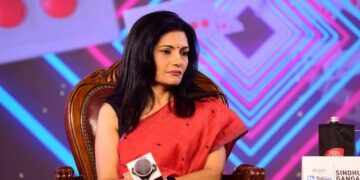
    Tech can help remove biases against women at the hiring level, while hybrid work gives women the highest flexibility, say tech leaders Sindhu Gangadharan and Irina Ghose.

    Tech & hybrid the tools to plug leak in women talent pipeline, says women panel at BT Tech Today Congress

    Chandrika Majhi holds her baby son outside her house in Gadadi, India.

    Women’s rights at stake as India’s population surpasses China’s

    India can move forward only by raising the levels of respect for women: PM Modi

    India can move forward only by raising the levels of respect for women: PM Modi

    Meet Nilima Motapatri, one of India’s richest women, not from IIT, IIM, her business is…

    Meet Nilima Motapatri, one of India’s richest women, not from IIT, IIM, her business is…

    Mothers are the primary influencers of children since the time they are born. Having a working mother can mould the psyche of children and make them more attuned to gender balance.

    7 ways working mothers influence children that will change your view about ‘letting’ women work

    Five Women Officers (WOs) being commissioned into the Regiment of Artillery are being provided exactly the same opportunities and challenges as their male counterparts

    First Batch of Women Officers Commissioned into the Regiment of Artillery of the Indian Army

  • Entrepreneurs
    Jyoti Ratre, 55, Becomes Oldest Indian Woman to Conquer Mount Everest: Who is she?

    Jyoti Ratre, 55, Becomes Oldest Indian Woman to Conquer Mount Everest: Who is she?

    Meet Amita Goyal Mumbai based Business women Entrepreneur & founder of Glasba Services , read her Success Story here

    Meet Amita Goyal Mumbai based Business women Entrepreneur & founder of Glasba Services , read her Success Story here

    From Isha Ambani to Namita Thapar: Lavish homes of India's women entrepreneurs

    From Isha Ambani to Namita Thapar: Lavish homes of India’s women entrepreneurs

    Trailblazing Entrepreneur Recognized for Her Achievements

    Trailblazing Entrepreneur Recognized for Her Achievements

    Goldman Sachs' education programme helped 2,400 Indian women entrepreneurs generate 28,000 cr revenue

    Goldman Sachs’ education programme helped 2,400 Indian women entrepreneurs generate 28,000 cr revenue

    Entrepreneur Zafreen Khan and her journey to success

    Entrepreneur Zafreen Khan and her journey to success

    Saral Creating An Ecosystem To Empower Women

    Saral Creating An Ecosystem To Empower Women

    How scrap paper helped Delhi’s Poonam Gupta set up a business empire in Scotland

    How scrap paper helped Delhi’s Poonam Gupta set up a business empire in Scotland

    The Future of Female Entrepreneurs in Beauty Shines Bright—shark Tank India Has Proof

    The Future of Female Entrepreneurs in Beauty Shines Bright—shark Tank India Has Proof

  • Women and Girls
    Bangladeshi Women, Girls, Minorities Face Rising Violence

    Bangladeshi Women, Girls, Minorities Face Rising Violence

    Empowering girls through STEM education

    Empowering girls through STEM education

    The women of Kanal Tola village are forced to live in this hut which has no door and no amenities.

    Banished for Bleeding: Tribal Indian Women Get Better Period Huts

    Largest Unit of Indian Women Peacekeepers in Sudan Conflict Zone

    Largest Unit of Indian Women Peacekeepers in Sudan Conflict Zone

    AI’s Captain Zoya Becomes The 1st Indian To Enter the SFO Aviation Museum

    AI’s Captain Zoya Becomes The 1st Indian To Enter the SFO Aviation Museum

    The stamp issued in 1998 in honour of Savitribai Phule

    On Savitribai Phule Jayanti, Know Why Every Literate Indian Woman is Indebted to Her

    UNDP Launches Ambitious Plan to Speed Up Progress on Gender Equality and Women’s Empowerment

    UNDP Launches Ambitious Plan to Speed Up Progress on Gender Equality and Women’s Empowerment

    Achieving Gender Equality in India: What Works, and What Doesn’t

    Achieving Gender Equality in India: What Works, and What Doesn’t

    Making Science An Inclusive Space For Women And Girls

    Making Science An Inclusive Space For Women And Girls

  • Exhibitions
  • Contact Us
  • Team
No Result
View All Result
  • Home
  • About us
  • News
    • Lifestyle
      • Home & Decor
      • Travel & Leisure
      • Fashion & Style
      • Beauty & Skincare
      • Food & Recipes
    • Health & Wellness
      • Mental Health
      • Nutrition
      • Physical Fitness
      • Women’s Health
      • Yoga & Meditation
    • Career & Business
      • Career Advice
      • Investment
      • Leadership & Mentorship
      • Work-Life Balance
      • Women Entrepreneurs
      • Inspiration & Stories
    • Inspiration & Stories
      • Women Achievers
      • Change Makers
      • Grassroots Heroines
      • Interviews & Profiles
      • Celebrity Stories
    • Culture & Society
      • Women in Indian Culture
      • Social Change
      • Festivals & Traditions
      • Regional Spotlights
      • Religion & Spirituality
    • Events & Community
      • Women-Centric Events
      • Webinars & Workshops
      • Community Voices
      • Local Groups & Forums
      • Awards & Recognitions
  • Magazine
  • Women’s Rights
    Women officers to help PM unfurl flag on I-Day

    Women officers to help PM unfurl flag on I-Day

    App Helps Identify Autistic Children in India.

    App Helps Identify Autistic Children in India

    Salmon Arm’s Mamas for Mamas took home the bulk of the money donated at Shuswap Women Who Wine’s latest Community Giving Event held at R.J. Haney Heritage Village and Museum on Saturday, June 18, 2023

    Salmon Arm’s Mamas for Mamas the toast of latest Shuswap Women Who Wine event

    Tech can help remove biases against women at the hiring level, while hybrid work gives women the highest flexibility, say tech leaders Sindhu Gangadharan and Irina Ghose.

    Tech & hybrid the tools to plug leak in women talent pipeline, says women panel at BT Tech Today Congress

    Chandrika Majhi holds her baby son outside her house in Gadadi, India.

    Women’s rights at stake as India’s population surpasses China’s

    India can move forward only by raising the levels of respect for women: PM Modi

    India can move forward only by raising the levels of respect for women: PM Modi

    Meet Nilima Motapatri, one of India’s richest women, not from IIT, IIM, her business is…

    Meet Nilima Motapatri, one of India’s richest women, not from IIT, IIM, her business is…

    Mothers are the primary influencers of children since the time they are born. Having a working mother can mould the psyche of children and make them more attuned to gender balance.

    7 ways working mothers influence children that will change your view about ‘letting’ women work

    Five Women Officers (WOs) being commissioned into the Regiment of Artillery are being provided exactly the same opportunities and challenges as their male counterparts

    First Batch of Women Officers Commissioned into the Regiment of Artillery of the Indian Army

  • Entrepreneurs
    Jyoti Ratre, 55, Becomes Oldest Indian Woman to Conquer Mount Everest: Who is she?

    Jyoti Ratre, 55, Becomes Oldest Indian Woman to Conquer Mount Everest: Who is she?

    Meet Amita Goyal Mumbai based Business women Entrepreneur & founder of Glasba Services , read her Success Story here

    Meet Amita Goyal Mumbai based Business women Entrepreneur & founder of Glasba Services , read her Success Story here

    From Isha Ambani to Namita Thapar: Lavish homes of India's women entrepreneurs

    From Isha Ambani to Namita Thapar: Lavish homes of India’s women entrepreneurs

    Trailblazing Entrepreneur Recognized for Her Achievements

    Trailblazing Entrepreneur Recognized for Her Achievements

    Goldman Sachs' education programme helped 2,400 Indian women entrepreneurs generate 28,000 cr revenue

    Goldman Sachs’ education programme helped 2,400 Indian women entrepreneurs generate 28,000 cr revenue

    Entrepreneur Zafreen Khan and her journey to success

    Entrepreneur Zafreen Khan and her journey to success

    Saral Creating An Ecosystem To Empower Women

    Saral Creating An Ecosystem To Empower Women

    How scrap paper helped Delhi’s Poonam Gupta set up a business empire in Scotland

    How scrap paper helped Delhi’s Poonam Gupta set up a business empire in Scotland

    The Future of Female Entrepreneurs in Beauty Shines Bright—shark Tank India Has Proof

    The Future of Female Entrepreneurs in Beauty Shines Bright—shark Tank India Has Proof

  • Women and Girls
    Bangladeshi Women, Girls, Minorities Face Rising Violence

    Bangladeshi Women, Girls, Minorities Face Rising Violence

    Empowering girls through STEM education

    Empowering girls through STEM education

    The women of Kanal Tola village are forced to live in this hut which has no door and no amenities.

    Banished for Bleeding: Tribal Indian Women Get Better Period Huts

    Largest Unit of Indian Women Peacekeepers in Sudan Conflict Zone

    Largest Unit of Indian Women Peacekeepers in Sudan Conflict Zone

    AI’s Captain Zoya Becomes The 1st Indian To Enter the SFO Aviation Museum

    AI’s Captain Zoya Becomes The 1st Indian To Enter the SFO Aviation Museum

    The stamp issued in 1998 in honour of Savitribai Phule

    On Savitribai Phule Jayanti, Know Why Every Literate Indian Woman is Indebted to Her

    UNDP Launches Ambitious Plan to Speed Up Progress on Gender Equality and Women’s Empowerment

    UNDP Launches Ambitious Plan to Speed Up Progress on Gender Equality and Women’s Empowerment

    Achieving Gender Equality in India: What Works, and What Doesn’t

    Achieving Gender Equality in India: What Works, and What Doesn’t

    Making Science An Inclusive Space For Women And Girls

    Making Science An Inclusive Space For Women And Girls

  • Exhibitions
  • Contact Us
  • Team
No Result
View All Result
Women India
No Result
View All Result
Home Black Herstory Month

A Conversation with Mary N. Elliott, Curator of American Slavery at the Smithsonian Museum

Anagha Salvi by Anagha Salvi
March 9, 2022
in Black Herstory Month, Featured, Feminist History, National, Violence & Harassment, Women's History
A Conversation with Mary N. Elliott, Curator of American Slavery at the Smithsonian Museum
Share on FacebookShare on Twitter
Post Views: 128


“When I think of Harriet Tubman, I think of the importance of freedom for all. I think of her as a humble woman, in the sense that I don’t think she ever stopped to think about freeing a nation. But that’s exactly what she did.”
mary-n-elliott-american-slavery-smithsonian-museum-harriet-tubman
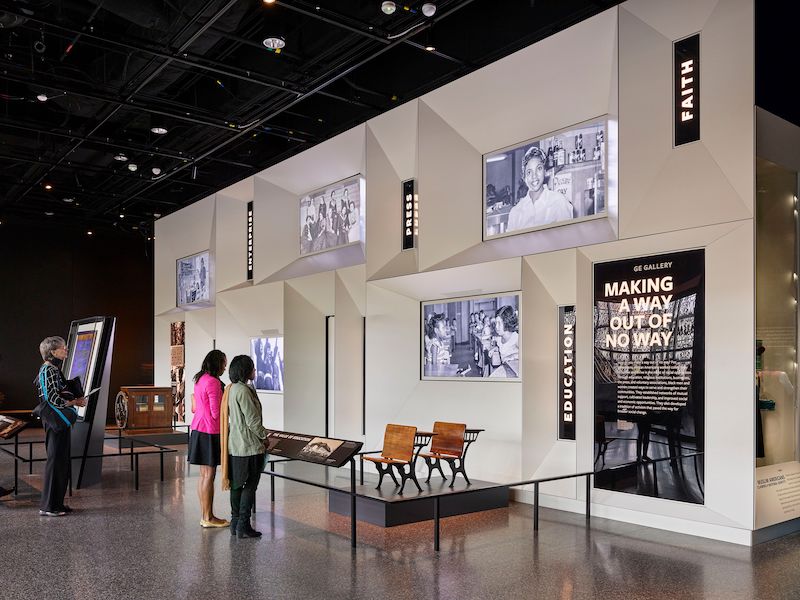
Inside Smithsonian’s National Museum of African American History and Culture. (Alan Karchmer) 

Editor’s note: Launching Tuesday, Feb. 1, and culminating on March 10, the Harriet Tubman Bicentennial Project pays tribute to this feminist icon with a special commemorative issue through Ms. online and in print. Explore the interactive groundbreaking site here.

Our final conversation in the Harriet Tubman Bicentennial Project features Mary N. Elliott, museum specialist and curator of American slavery at the Smithsonian Museum. Elliott helped to research, conceptualize and design the “Slavery and Freedom” inaugural exhibition for Smithsonian’s National Museum of African American History and Culture.

Already, the exhibit—seen since the opening of the museum in 2016—has inspired critically acclaimed creative works, from country musician Rhiannon Giddens’s collaborative album “Songs of Our Native Daughters” (2019) to artist Bisa Butler’s quilt “I Go to Prepare a Place for You” (2021), based on the recently acquired carte-de-visite of Harriet Tubman, to historian Tiya Miles’s National Book Award-winning All That She Carried: The Journey of Ashley’s Sack, a Black Family Keepsake (2021). 

Ms.’s Janell Hobson interviewed Elliott over Zoom. 


mary-n-elliott-american-slavery-smithsonian-museum-harriet-tubman
Mary N. Elliott.

Janell Hobson: What were some of the decisions that you made in designing the “Slavery and Freedom” exhibit? 

Mary N. Elliott: Your question makes me think of the Black History Month pantheon: Harriet Tubman, Frederick Douglass, Sojourner Truth, Martin Luther King Jr. But it’s one thing to learn about them as icons; it’s another thing to learn about them as just people. Human beings with feelings, with experiences, with connections to family and community, with aspirations. So, one of the things we tried to do in the exhibition was to bring forward that human story.  

We told their personal stories. Look at the WPA narratives—the Works Progress Administration slave narratives. We pulled quotes from people talking about seeing their loved ones sold on the auction block or losing a child taken away from them during the period of slavery. How do you draw people in so that they connect with these stories on a very human level, not going, “Oh, that poor Black person!” if you’re not Black, but looking at that person and thinking, “That’s horrible! I’m a mother, and I would hate for my child to be taken from me.” 

Harriet Tubman, Frederick Douglass, Sojourner Truth, Martin Luther King Jr.—it’s one thing to learn about them as icons; it’s another thing to learn about them as just people. Human beings with feelings, with experiences, with connections to family and community, with aspirations.

Hobson: What went into creating the exhibit of Harriet Tubman and capturing her personal story? 

Elliott: Looking at Harriet Tubman, wow, as a woman—that’s a lot of strength and digging down deep to get a sense of nurturing, that sense of care, that sense of being a daughter, a wife, a community member. She’s a caregiver for elders even after she’s finished helping all these people gain their freedom. Who is this woman beyond the iconic? That was really important for us: to humanize the experiences of African Americans and to also show that we’re not monolithic.  

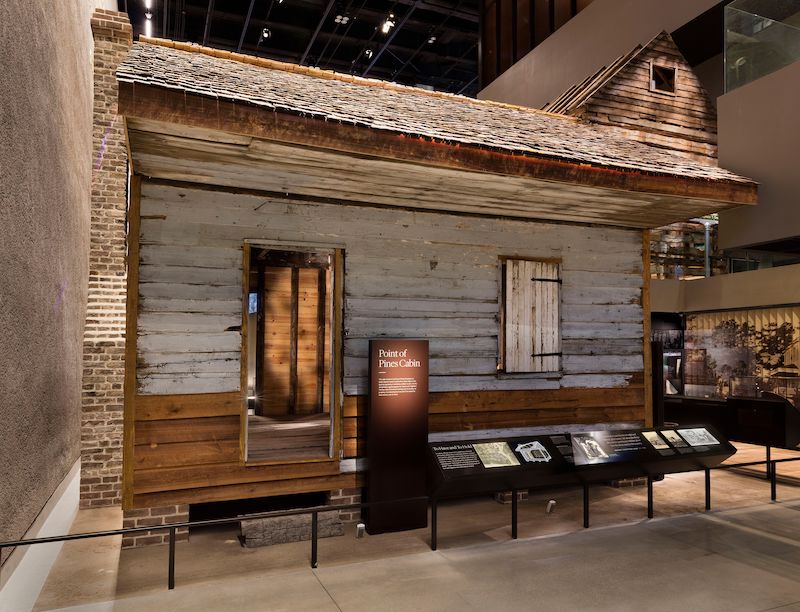
So, if you took for example just slavery, people could look at Black folks and say, well they were no different than the extension of the tool of a hoe. They cultivated crops, they lived in slave cabins, but what did it mean for them to suffer the brutality of slavery? Because we can become immune to that, sadly. You hear it over and over again, like when people say, “Oh, not another movie on slavery.” There’s more to it than just another movie on slavery. Who was this person? That is the story that is so relevant to us today.  
mary-n-elliott-american-slavery-smithsonian-museum-harriet-tubman
From “Slavery and Freedom” Exhibit at Smithsonian’s National Museum of African American History and Culture. (Eric Long)  

Hobson: It’s interesting that you bring that up. I’ve seen that debate constantly on social media, and I’ve always gathered from the “not another slavery movie” conversation that it’s less about not wanting to know this history and more about how we’re telling that story. Because no one said that when Quentin Tarantino’s Django Unchained came out—I’ll just say that. But the year after, with Steve McQueen bringing the harsh reality of slavery in 12 Years a Slave, then it’s the complaint that we have “too many” slave movies. So, I’m curious about this reaction. I think much of it is based on not only who’s telling the story but also how the story’s being told.

I imagine as a curator that this was part of your own process in terms of designing, right? How does storytelling come into play when you’re thinking of designing an exhibit on slavery? 

Elliott: There are so many different things that we did in terms of storytelling. There were people who told us it was going to be hard to find first-person voices during the early period of slavery. So, it’s like, let’s go to some letters even if people thought “Black people couldn’t read or write.” There were some people who could, even though it was against the law, right? But there are slave narratives written by people like Harriet Jacobs who recounts what it was like being a young woman enslaved and being subjected to sexual violence. And there are more well-known narratives written by Frederick Douglass.  

But then we also have some collection objects given to us, which were written by people who are lesser known. There are letters written between free Black people, between husbands and wives, even letters written during the Civil War by Black soldiers. And then there are the oral histories that were taken of formerly enslaved people. And to see those quotes or records written down in the Freedmen’s Bureau records when people were interviewed, and even if that person couldn’t write, the interviewer was writing down the notes, the transcription of what that person was saying.  

Then there are people who observed, for example, the trans-Atlantic slave trade period. That early period—the 17th century, 18th century—they’re observing what’s going on. And they were saying things like, I watched this happen while we were on the west coast gathering our human cargo. You get insight from observers, from people who experienced this period. So, bringing forward the first-person voice was important.

You visited the museum, you saw all those quotes on the wall, didn’t you?  

Hobson: Yes, I read those. 

Elliott: All those quotes on the wall, Oh my God, that was so important! So that when people say, “Well, you know that couldn’t have happened,” or “That’s hyperbole” or whatever, if you look at the Searchable Museum online, one of the things we did with the Civil War, for example, was to go to the records.

You want to say that the Civil War was not about slavery? Why don’t we look at the secession documents? If you go to the section that talks about the 1860 presidential election, and you read what Abraham Lincoln was saying and what the president of the Confederacy was saying, you hear their first-person voice and you see in the secession documents one of them basically saying, “We define ourselves by African slavery.” Not slavery, African slavery. So, being able to literally pull this quote out of the record, we literally let the record speak for itself.  

We also selected certain graphics so that people could encounter a human presence. There are only so many portraits that included Black people, so we had to really be specific about “crop-ins” on that person. Don’t just show the big portrait, actually show there’s a Black man sitting among the audience listening to the announcement that we are now going into a Revolutionary War, for example.  

Hobson: I like that a main theme of the exhibit, of the museum itself, is shifting the dominant cultural gaze. In thinking about the exhibit design, I liked the way we had to descend all the way to the ground floor and then work our way up. It has a linear structure to it, even though it’s in a spiral, so it’s not exactly as linear as you would expect.  

Elliott: The history gallery is very linear, but it lays the foundation for everything that follows. But that history, the way it unfolds, you see how the experiences of African Americans tell the American story through the African American lens, and how these experiences ebb and flow. How we achieve and then something happens to set us back, then we achieve again, and then again, something happens. But when you think about Harriet Tubman, her lens is more like “Okay, this may be where I am in my life right now, but I am going to make a change.”  

And not only am I going to make a change for myself, I’m going to change the situation for others. And for her to risk her life and go back … Remember we said people can get numb to the brutality of slavery if they see it over and over and over again? With Harriet Tubman, I think people take for granted that “yeah, she’s the lady who went back and freed other slaves,” but let’s just think about what that took. This woman risked her life every time she went down, and those journeys back to Maryland were really focused on freeing her family and friends. And the heartache she experienced in not being able to free that one sister. And after she’s freed her family and friends, she goes back and helps the Union army free hundreds more people when she could have just stayed up North and enjoyed her freedom! Her work was part and parcel of changing the tide for the whole nation, so I always say Harriet Tubman helped to free the nation.  

Hobson: Yes, she absolutely did! Was there a deliberate attempt to “feminize” Tubman in the exhibit? I say that because I had come across her panel within the same section of all these other freedom fighters, and I saw the pistols and the guns that these other men had, but when we get to Tubman, we see her shawl that was gifted to her by Queen Victoria, we see her personal hymnal.

While these are great things to see, the panels depicted a more domestic, feminine presentation of Tubman, which really stands out against the more masculine focus of the other freedom fighters—even though everybody knows about her pistol.  

Elliott: We were limited only by the objects that we had. Our founding director, Lonnie Bunch, was contacted by Dr. Charles Blockson, who’s affiliated with Temple University, and he’s a collector and he had these artifacts from Harriet Tubman, which included some utensils of hers, some photographs of her funeral and other activities, and then it included collars, lace collars, handkerchiefs and this shawl from Queen Victoria, her hymnal.  

At the same time, we also told her story in the Civil War section. We told her story as this activist, abolitionist freedom fighter, but her story is told in many different ways throughout the exhibition. I think what’s really important with her is that we saw her as an iron fist in a velvet glove. She liked the finer things in life. Like, if you look at the object we collected in partnership with the Library of Congress, the Emily Howland album, and the way she posed herself, you see that defiant look, but you also see a woman who’s very styled in a way that presents both her femininity and strength. That gets around that trope of the strong Black woman seeming like a workhorse.  

You want to say that the Civil War was not about slavery? Why don’t we look at the secession documents? The president of the Confederacy, you hear their first-person voice basically saying, “We define ourselves by African slavery.” Not slavery—African slavery. We literally let the record speak for itself.  

Hobson: I appreciate the feminization of Tubman in the exhibit because it definitely complicates this trope of strong Black womanhood. 

Elliott: We are strong, and we are women, and we are feminine. And also—this is important—while we are protective of others and we know our worth and our rights and stand up for those things, we also deserve to be protected and cherished.  

mary-n-elliott-american-slavery-smithsonian-museum-harriet-tubman
Pinback Button with print of Harriet Tubman (1954). (Collection of the Smithsonian National Museum of African American History and Culture / Gift of Charles L. Blockson)

Hobson: Yes absolutely. I mean that’s what we’re doing: We’re protecting and cherishing Harriet Tubman’s legacy.  

Elliott: What’s really important about her, what humanizes her, is the deep and abiding love she had for her family. It grounded her and moved her to do the things that she did, and if we think of the tremendous loss she expressed in never being able to free her own sister, that speaks volumes to the love that drove her to risk her own life to secure freedom for others. And her community is her family and her extended community, her kinship network.  

When I think of Harriet Tubman, I think of the importance of freedom for all. I think of her as a humble woman, in the sense that I don’t think she ever stopped to think about freeing a nation. But that’s exactly what she did. 

The essay series for the Harriet Tubman Bicentennial Project is as follows:

Michelle D. Commander, “Let Me Not Forget: Harriet Tubman’s Enduring Speculative Visions” | Feb. 2

Chanda Prescod-Weinstein, “Harriet Tubman, Astronomer Extraordinaire” | Feb. 3

The Life of Harriet Tubman 

Kate Clifford Larson, “Harriet Tubman: A Life Beyond Myths” | Feb. 8 

“Family Portraits of a Legend: Conversations with the Descendants of Harriet Tubman” | Feb. 9 

Deirdre Cooper Owens, “Harriet Tubman’s Disability and Why It Matters” | Feb. 10 

The Untold Stories and Songs of Harriet Tubman 

Edda L. Fields-Black, “‘Harriet’ and the Combahee River Uprising” | Feb. 15 

A Conversation with Music Composer Nkeiru Okoye | Feb. 16 

Maya Cunningham, “The Sound World of Harriet Tubman” | Feb. 17 

Imagining Harriet Tubman 

Amy Corron and Rebecca Rouse, “Why Video Games Education Needs Harriet Tubman” | Feb. 22

A Conversation with Artist Nettrice Gaskins | Feb. 23 

Michele Wallace, “Harriet Tubman in the Art of Faith Ringgold” | Feb. 24 

Rediscovering Harriet Tubman 

Jonathan Michael Square, “The Two Harriets” | March 1 

A Conversation with Karen V. Hill, Director of the Harriet Tubman Home | March 2 

Douglas V. Armstrong, “Using Archaeology to Rediscover Harriet Tubman’s Life in Freedom” | March 3 

Celebrating a Legacy 

Keisha N. Blain, “Justice and the Meaning of the Tubman $20” | March 8 

A Conversation with Mary N. Elliott, Curator of American Slavery at the Smithsonian Museum | March 9

Harriet Tubman Syllabus | March 10 


Questions or press queries about the series? Contact tubman200@msmagazine.com.


Source link

Previous Post

‘We Wanted to Be in Combat Zones. We Were as Courageous as the Men.’

Next Post

Al trabajar a distancia, las mujeres deciden quién se entera de su embarazo

Anagha Salvi

Anagha Salvi

Associate Editor & Creative Director

Next Post
Al trabajar a distancia, las mujeres deciden quién se entera de su embarazo

Al trabajar a distancia, las mujeres deciden quién se entera de su embarazo

Leave a Reply

Your email address will not be published. Required fields are marked *

  • Trending
  • Comments
  • Latest
Who Is the Real China? Eileen Gu or the Chained Woman?

Who Is the Real China? Eileen Gu or the Chained Woman?

February 15, 2022
The Future of Female Entrepreneurs in Beauty Shines Bright—shark Tank India Has Proof

The Future of Female Entrepreneurs in Beauty Shines Bright—shark Tank India Has Proof

January 12, 2023
Shifting the Focus: Migration and Female Labour Force Participation

Shifting the Focus: Migration and Female Labour Force Participation

October 3, 2022
Recent global studies on digital equality highlight that digital transformation’s benefits across high, low and middle-income countries are not reaching most women

Digital transformations for gender equality

May 3, 2023
International Association of Sheet Metal, Air, Rail and Transportation Workers Helps Fund Pioneering Nonprofit’s Construction Camp For Girls

International Association of Sheet Metal, Air, Rail and Transportation Workers Helps Fund Pioneering Nonprofit’s Construction Camp For Girls

0
Marvel’s First Deaf Superhero: A First Step for Disabled Filmmakers

Marvel’s First Deaf Superhero: A First Step for Disabled Filmmakers

0
Working with the Taliban for Women’s Rights: It’s Like Speaking to Fish about Land!

Working with the Taliban for Women’s Rights: It’s Like Speaking to Fish about Land!

0

Announcing the Recipient of the Edie Windsor Champion for LGBTQAI+ Equality Award, 2021

0
TAGMA 2026 to Showcase Next-Gen Tooling Innovations at Die & Mould India Expo

TAGMA 2026 to Showcase Next-Gen Tooling Innovations at Die & Mould India Expo

March 30, 2026
Countdown To The Icc Women’s T20 World Cup 2026 Begins As Scoreboards Around The World Mark 100 Days To Go

Countdown To The Icc Women’s T20 World Cup 2026 Begins As Scoreboards Around The World Mark 100 Days To Go

March 5, 2026
Women’s Asia Cup Rising Stars 2026: Tanuja Kanwar Spins A Web Around Nepal As India A Qualifies For Semi-Finals

Women’s Asia Cup Rising Stars 2026: Tanuja Kanwar Spins A Web Around Nepal As India A Qualifies For Semi-Finals

February 18, 2026
India U17 Blank Bangladesh U19 To Win SAFF U19 Women’s Title

India U17 Blank Bangladesh U19 To Win SAFF U19 Women’s Title

February 10, 2026

Recent News

TAGMA 2026 to Showcase Next-Gen Tooling Innovations at Die & Mould India Expo

TAGMA 2026 to Showcase Next-Gen Tooling Innovations at Die & Mould India Expo

March 30, 2026
Countdown To The Icc Women’s T20 World Cup 2026 Begins As Scoreboards Around The World Mark 100 Days To Go

Countdown To The Icc Women’s T20 World Cup 2026 Begins As Scoreboards Around The World Mark 100 Days To Go

March 5, 2026
Women’s Asia Cup Rising Stars 2026: Tanuja Kanwar Spins A Web Around Nepal As India A Qualifies For Semi-Finals

Women’s Asia Cup Rising Stars 2026: Tanuja Kanwar Spins A Web Around Nepal As India A Qualifies For Semi-Finals

February 18, 2026
India U17 Blank Bangladesh U19 To Win SAFF U19 Women’s Title

India U17 Blank Bangladesh U19 To Win SAFF U19 Women’s Title

February 10, 2026

Welcome to our complete News Portal about Women India org, Lifestyle, News, and Articles. Take your time and immerse yourself in this amazing experience!

Facebook Youtube Twitter Linkedin Instagram Telegram

Women India Network

Women India Network
Beauty N Fitness India
Women India
Beauty N Fitness Times
Modern Fashion Life Style
Load More

TAGMA 2026 to Showcase Next-Gen Tooling Innovations at Die & Mould India Expo

TAGMA 2026 to Showcase Next-Gen Tooling Innovations at Die & Mould India Expo

by Anagha Salvi
March 30, 2026
0

Die & Mould India, the largest and most prestigious exhibition for the die and mould industry in India, is set...

© 2026 All Rights Reserved. Women India org

Powered By:Chrysolite Media Network Pvt. Ltd.

© 2025 All Rights Reserved. Women India org

No Result
View All Result
  • Home
  • About us
  • News
    • Lifestyle
      • Home & Decor
      • Travel & Leisure
      • Fashion & Style
      • Beauty & Skincare
      • Food & Recipes
    • Health & Wellness
      • Mental Health
      • Nutrition
      • Physical Fitness
      • Women’s Health
      • Yoga & Meditation
    • Career & Business
      • Career Advice
      • Investment
      • Leadership & Mentorship
      • Work-Life Balance
      • Women Entrepreneurs
      • Inspiration & Stories
    • Inspiration & Stories
      • Women Achievers
      • Change Makers
      • Grassroots Heroines
      • Interviews & Profiles
      • Celebrity Stories
    • Culture & Society
      • Women in Indian Culture
      • Social Change
      • Festivals & Traditions
      • Regional Spotlights
      • Religion & Spirituality
    • Events & Community
      • Women-Centric Events
      • Webinars & Workshops
      • Community Voices
      • Local Groups & Forums
      • Awards & Recognitions
  • Magazine
  • Women’s Rights
  • Entrepreneurs
  • Women and Girls
  • Exhibitions
  • Contact Us
  • Team

© 2026 All Rights Reserved. Women India org